Guide
How to Measure for the Right Belt Size
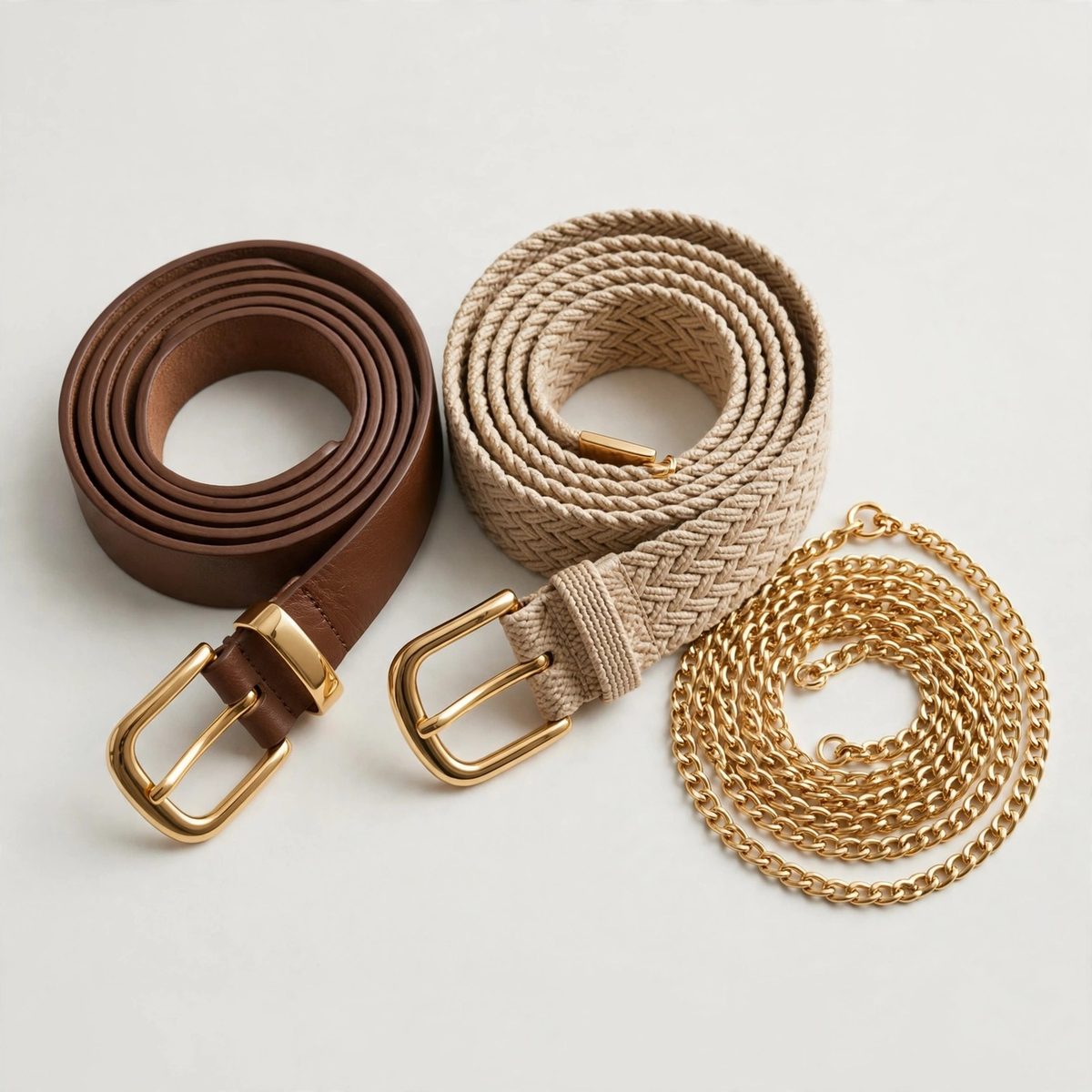
How to Measure for the Right Belt Size
Belt sizing confuses almost everyone, because the number on the belt rarely matches the number on your trousers. A belt's size is measured from the buckle to the middle hole — not your waist size, not your dress size. This guide walks through measuring correctly, translating that measurement into the right belt size, and accounting for the different ways belts are worn, so the styles in our belts and waist accessories collection fit the way they should.
What belt size actually means
For most belts, the stated size is the distance in inches from the buckle's prong (or the fold where the buckle attaches) to the middle of the five holes — typically the third hole. That means a "size 30" belt measures about 30 inches to its middle hole, with roughly two inches of adjustment in either direction through the other holes. Your trouser size is usually 2 to 4 inches smaller than the belt size that fits you, because belts sit over fabric and need overlap for the buckle end.
Method 1: measure your body
Where you wear it matters
Decide first where the belt will sit. A belt worn at the natural waist (the narrowest point, usually at or just above the navel) needs a smaller size than the same belt worn low on the hips. Dresses and high-waisted trousers take waist belts; low-rise jeans take hip belts. Measure at the exact spot you plan to wear the belt — this single decision causes more sizing mistakes than anything else.
Taking the measurement
- Wear the trousers, skirt, or dress you will pair the belt with, since fabric thickness changes the measurement.
- Run a soft measuring tape around your waist or hips at the wearing point, keeping it level and snug but not tight — you should be able to slip a finger underneath.
- Note the number, then add 2 inches. That total is a good starting belt size, because it lands the buckle on the middle hole with room to adjust.
Example: if your waist measures 28 inches where you will wear the belt, start with a size 30. If you are between sizes, size up — a belt that fastens on the last hole looks strained and leaves a long flapping tail, while one on the first hole still looks tidy.
Method 2: measure a belt you already own
If you have a belt that fits well, it is the best measuring tool you own. Lay it flat and measure from the buckle prong to the hole you actually use. That distance is your ideal belt size — buy that number. This method automatically accounts for your body, your preferred wearing position, and how much overlap you like, so it beats body-measuring for accuracy.
Sizing for different belt styles
Classic buckle belts
Standard belts with five holes follow the sizing above directly. Styles like the Galae Slim Leather-Look Belt are straightforward: measure, add two inches, done. If you plan to wear the same belt at both waist and hips, buy for the larger position — a belt that is slightly long at the waist still works, while one that cannot reach around your hips does not.
Stretch and woven belts
Elastic and woven belts, such as the Miraluxe Woven Stretch Belt, forgive sizing errors because the material gives. They are usually sold in S/M/L ranges rather than inch sizes. When between sizes, size down — stretch belts relax with wear, and a snug start keeps them from sliding later.
Chain and waist-chain belts
Chain belts like the Noctelle Chain Waist Belt or the Galae Pearl Waist Chain Belt drape rather than cinch, so exact sizing matters less than overall length and drop. Check the product page for the total chain length and picture where it will fall on your torso — these are worn as jewelry for the waist, and a little extra drape is part of the look.
Wide and corset-style belts
Wide belts cover more vertical space, so they interact with your torso length as well as your circumference. Petite shoppers may find very wide belts overwhelm a short waist, while they look proportional on longer torsos. Measure the same way, but also check the belt's width against your waist's vertical space between ribs and hips.
Common sizing mistakes
- Buying your trouser size: the most common error. Trouser size is almost always smaller than the belt size you need.
- Measuring over a bulky sweater: for a belt you will mostly wear over dresses, measure over a dress — not a winter coat. Match the measurement to the real use case.
- Ignoring the wearing position: waist and hip measurements can differ by 4 inches or more on the same person.
- Sizing down for stretch belts: reversed — size down, not up, because elastic relaxes.
- Forgetting the tail: on a well-fitted belt, the tail end should reach the first belt loop past the buckle. Much longer looks sloppy; much shorter looks like the belt is too small.
When a belt needs adjusting
A belt that is one hole off is not a lost cause. A cobbler or leather worker can add holes to a leather-look belt for a small fee, and many can shorten a belt from the buckle end — a cleaner alteration than cutting the tail. For chain belts, a jeweler can often remove or add links. These are inexpensive fixes worth knowing about before you give up on an otherwise ideal belt. Browse the full belts and waist accessories range once you know your number.
Quick reference
- Belt size = buckle to middle hole, in inches.
- Body measurement + 2 inches = starting belt size.
- Measure where you will wear it, over what you will wear it with.
- Between sizes: size up for fixed belts, size down for stretch belts.
- A favorite well-fitting belt is the most accurate measuring tool you own.
Two minutes with a tape measure saves the whole cycle of ordering, returning, and reordering. Measure once, and the belt you buy is the belt that fits.