Guide
Finding a Comfortable Headband Fit
Finding a Comfortable Headband Fit
A headband should feel like an afterthought — present in your look, absent from your awareness. But anyone who has endured a headband headache by hour two knows that fit is everything. This guide covers how headbands fit, what causes discomfort, and how to find a style from our fashion hair accessories collection that stays comfortable from morning to the last dance.
How a headband actually stays on
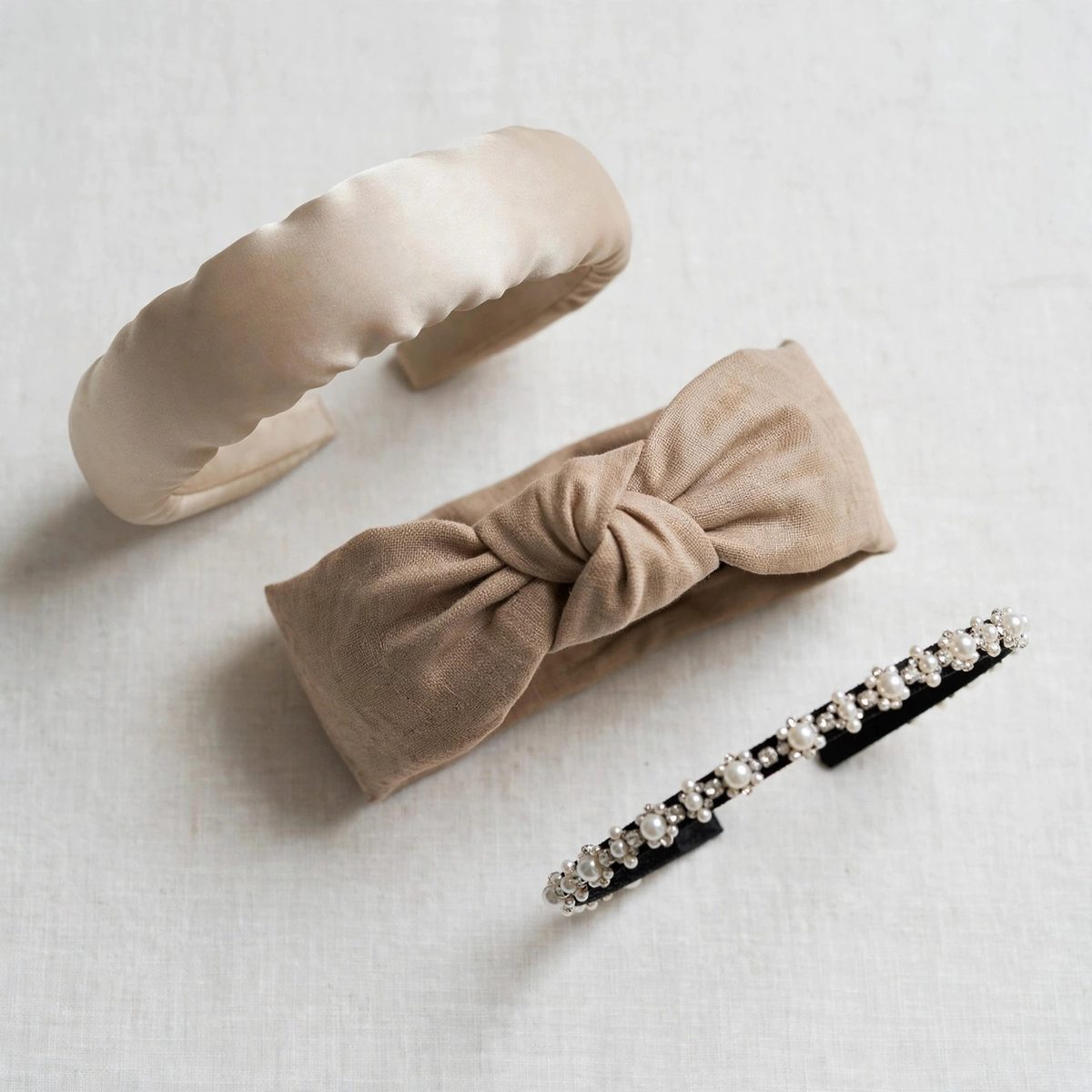
Headbands stay in place through a mix of tension and grip. A rigid band uses spring tension against the sides of your head; a soft or padded band, like the Miraluxe Padded Satin Headband, combines gentle tension with a cushioned surface that distributes pressure. Fabric-covered and knotted styles rely partly on friction against your hair. Understanding which mechanism a headband uses tells you where pressure will land — and pressure concentrated in one spot is what causes the classic headband ache.
Measuring your head for a headband
Take a simple measurement
Use a soft measuring tape and run it over the top of your head from behind one ear to behind the other, following the path a headband would take. Most adult headbands are designed around an average of roughly 20 to 22 inches along this path, but individual heads vary more than people expect. If you fall well above or below that range, pay extra attention to fit notes on the product page or choose an adjustable style.
Consider your hair volume
Thick, curly, or very long hair adds real bulk between the band and your skull. If your hair is voluminous, a headband that fits a fine-haired head snugly may press hard on yours. Look for wider bands that spread pressure, padded styles that cushion it, or designs with some flex rather than rigid, narrow bands that concentrate force on two small points behind your ears.
What causes headband headaches
The familiar ache comes from sustained pressure on the temples and the area behind the ears, where nerves run close to the surface. Three factors drive it:
- Too much tension: a band that is too small, or too rigid for your head shape, presses harder than it needs to.
- Too little surface area: a thin, hard band focuses all its force on a narrow line. Wider bands spread the same holding force over more skin.
- Wrong placement: a band sitting too far forward presses on the temples; pushed too far back, it slides and you compensate by choosing a tighter band.
If a headband hurts within the first hour, it is the wrong size or shape for you — discomfort rarely "breaks in" the way shoes might. Swap the style rather than suffering through the event.
Choosing a style for comfort
Padded and fabric-covered bands
Padding is the single biggest comfort upgrade. A cushioned band distributes pressure and the fabric covering adds grip, so the band can hold with less tension. These are strong choices for all-day wear — workdays, weddings, travel days — and for anyone who has had trouble with hard plastic bands in the past.
Wide vs. narrow
Wide bands spread pressure and tend to feel more secure with less squeeze, which makes them a good default for sensitive heads. Narrow bands look delicate and refined, especially for evening looks, but concentrate pressure — wear them for shorter stretches or choose a padded narrow style.
Knotted and turban styles
Soft knotted bands and turban-style headbands are among the most forgiving options because the fabric flexes around your head shape instead of fighting it. They suit a wide range of head sizes and are gentle on fine or thinning hair that a rigid band might snag.
Toothed and comb-style bands
Bands with small teeth or combs grip hair actively, which suits slippery, fine hair that shrugs off smooth bands. The trade-off is potential pulling at the roots — fine for a few hours, less ideal for all-day wear on sensitive scalps.
Placement and wearing tips
- Find the sweet spot: position the band about an inch behind your hairline for most styles — far enough back to avoid temple pressure, far enough forward to look intentional.
- Anchor with texture: a little texture at the roots (from day-old hair or a light texturizing product) gives the band something to grip, so you can choose a gentler fit.
- Test-drive before the event: wear a new headband around the house for two or three hours before debuting it at a wedding or party. Comfort problems show up well before the event does.
- Pair thoughtfully: if you are styling an updo for an event, place the headband after the style is set, and consider coordinating with other pieces from our hair accessories — for instance, Galae Silk-Look Scrunchies for a soft ponytail that will not compete with the band.
- Give your head breaks: on very long days, slipping the band off for a few minutes during a meal or a car ride resets the pressure clock.
Headbands and different hair types
Fine or slippery hair
Choose bands with fabric covering, light padding, or subtle grip texture. Velvet-look finishes grip particularly well without pulling. Avoid very smooth, rigid bands that slide forward and tempt you to size down into headache territory.
Thick or curly hair
Go wider and softer. A wide padded or fabric band sits over volume instead of fighting it, and flexible styles accommodate the extra bulk. If you wear your hair up, place the band to frame the style rather than trying to compress everything underneath it.
Short hair and pixie cuts
With less hair to anchor to, fit matters more — the band does all the work. A band with gentle, even tension and a non-slip lining stays put without needing to be tight.
Comfort checklist
- Measure over the top of your head, ear to ear, and factor in your hair volume.
- Prefer padded or wide bands for long wear; save narrow rigid styles for shorter outings.
- Place the band about an inch behind the hairline.
- Test-wear for a few hours before the big event.
- If it aches within an hour, it is the wrong fit — not a break-in project.
The right headband should carry your look without carrying your attention. Measure once, choose for comfort first, and you will forget you are wearing it — which is exactly the goal.