Guide
Scarf Fabrics Explained: Chiffon to Knit
Scarf Fabrics Explained: Chiffon to Knit
Two scarves can look identical in a product photo and behave completely differently in your hands — one floats, one drapes, one insulates, one wrinkles if you look at it wrong. The difference is the fabric. This guide walks through the fabrics you will meet most often in our scarves and wraps collection, what each one does well, and how to choose between them for evening looks, travel, and cold weather.
Chiffon: the sheer floater
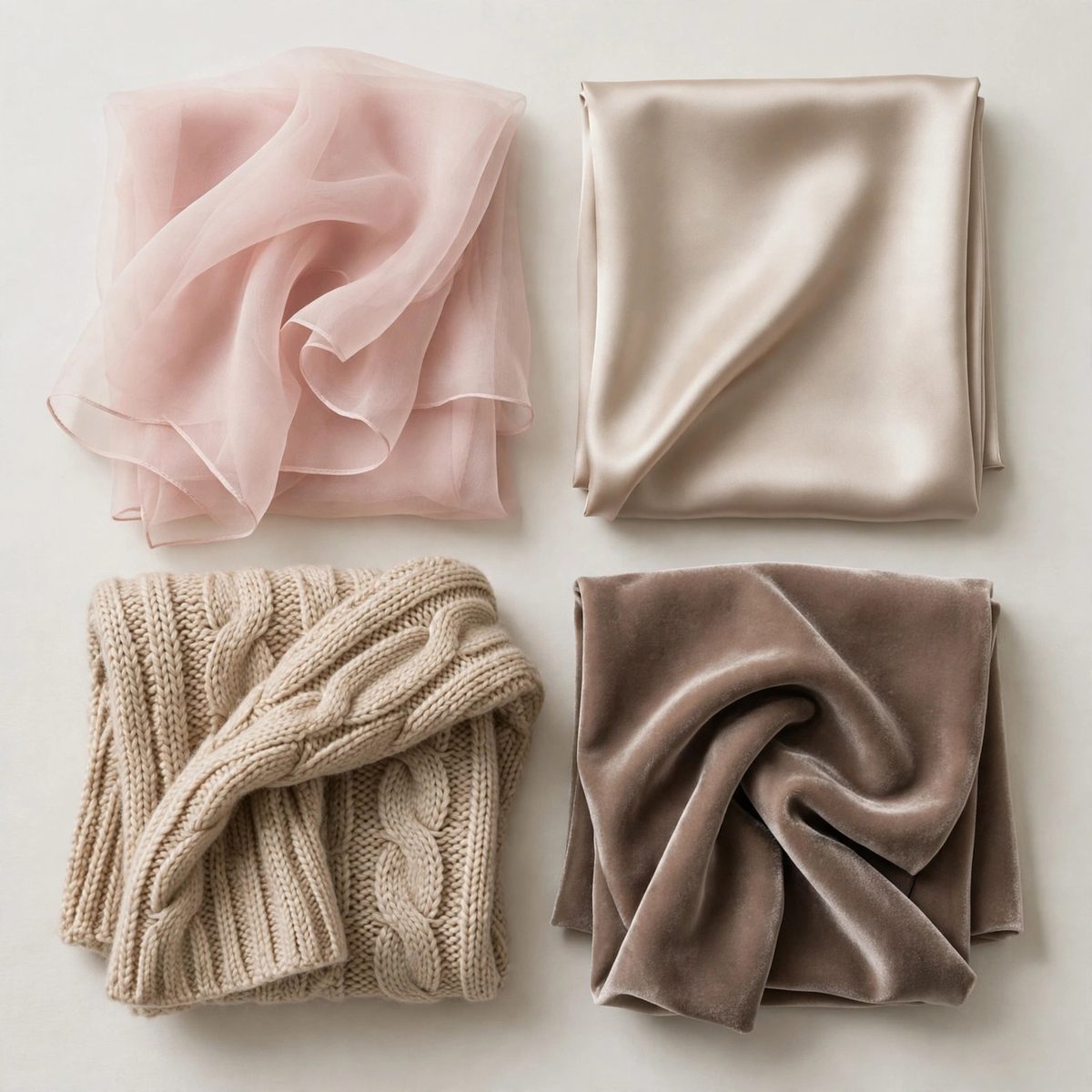
Chiffon is a lightweight, sheer plain-weave fabric with a soft, slightly textured hand. A scarf like the Miraluxe Lightweight Chiffon Scarf is the classic evening choice: it adds color and movement over a dress without adding warmth or bulk, and it photographs beautifully because light passes through it. Chiffon's trade-offs are real — it snags easily on jewelry and rough nails, it wrinkles, and it offers no insulation. Treat it as an accessory fabric for mild weather and indoor evenings, not a working layer.
Styling chiffon
Chiffon's sheerness rewards simple styling: a single loose loop, draped over the shoulders as a wrap, or knotted once at the side. Fussy knots fight the fabric's nature — let it fall and move. Because it is transparent, layering two tones creates depth that a single opaque scarf cannot.
Satin and silk-look: the lustrous draper
Satin describes a weave with long floating threads that create a smooth, reflective surface. "Silk-look" satin, like the Noctelle Satin Silk-Look Scarf, mimics silk's sheen at a friendlier price. Satin scarves drape in clean, liquid folds and read as formal — they are natural partners for evening bags and occasion dressing. They wrinkle less than chiffon but can show water spots, and the smooth surface means knots can slip; a simple drape or a single secure knot usually looks better than complex tying.
Georgette and crepe: chiffon's sturdier cousins
Georgette is slightly heavier and more textured than chiffon, with a matte finish and a subtle grain. Crepe fabrics have a characteristic crinkled texture from twisted yarns. Both drape well, resist wrinkling better than chiffon, and hold a knot more securely thanks to their texture. If you love the airy look of chiffon but want something that survives a handbag and an evening out, georgette is the practical upgrade.
Jersey and knit: the stretchy comfort layer
Knit scarves — including infinity styles like the Miraluxe Infinity Knit Scarf — are made from interlocking loops of yarn rather than woven threads, which gives them natural stretch and a soft, cozy hand. Knits are the warmth workhorses: they insulate, they bounce back from wrinkles, and an infinity loop needs no tying at all — just loop it twice and go. The look is relaxed rather than formal, which makes knit scarves better for daytime, travel, and casual evenings than for black-tie events.
What "brushed" means
You will sometimes see knit or woven scarves described as "brushed." Brushing raises fine fibers on the fabric's surface, creating a soft, slightly fuzzy hand and trapping more air for warmth. A brushed plaid blanket scarf, like the Galae Plaid Blanket Scarf, feels noticeably softer and warmer than the same weave unbrushed.
Wool-look and acrylic blends: winter warmth
Many winter scarves use wool-look or acrylic-blend fabrics that mimic wool's warmth and texture. These are the right choice when the job is insulation: commuting, outdoor events, cold restaurants. They are heavier and bulkier than fashion fabrics, which changes the styling — big soft loops and wraps rather than delicate knots. Keep them away from very fine or delicate outfits, where the visual weight can overwhelm.
Velvet and velour: evening texture
Velvet's dense pile catches light in a way no flat fabric can, giving scarves and wraps a rich, dimensional look that reads as luxurious after dark. Velvet does not drape as fluidly as satin — it has more body — so it works best in simple wraps and shawls rather than intricate knots. It also shows pressure marks where it has been folded, so store velvet pieces rolled or hanging rather than pressed flat in a drawer.
Choosing by occasion
- Formal evening / wedding: chiffon, satin, or silk-look. Light, lustrous, and proportionate to dressy outfits. Pair with an evening-appropriate bag in a complementary tone.
- Travel: knit or jersey. Wrinkle-resistant, comfortable as a pillow on a plane, and warm enough for over-air-conditioned cabins.
- Cold weather: brushed knits, wool-look weaves, blanket scarves. Prioritize warmth and coverage over delicacy.
- Everyday polish: georgette, crepe, or light knits — fabrics that hold a knot through a workday and still look fresh at dinner.
Care basics by fabric
- Chiffon and georgette: hand wash cold or use a mesh bag on delicate; hang or lay flat to dry. Expect some wrinkling — steam gently rather than ironing directly.
- Satin and silk-look: hand wash cold, avoid wringing, and dry away from direct heat. Iron on low on the reverse side if needed.
- Knits: machine washable on gentle in most cases; lay flat to dry so the knit does not stretch out of shape.
- Brushed and wool-look: check the product page for care guidance; many do best with gentle cycles and flat drying to preserve the brushed surface.
- Velvet: spot clean when possible; steam to refresh the pile rather than pressing it flat.
Quick fabric comparison
- Lightest: chiffon, then georgette, then satin.
- Warmest: brushed knits and wool-look weaves.
- Most wrinkle-resistant: knits and crepe.
- Most formal: satin and silk-look, followed by chiffon and velvet.
- Easiest to tie securely: textured fabrics (crepe, knit) beat slippery ones (satin, silk-look).
Once you know what each fabric does, scarf shopping gets much simpler: pick the fabric for the job first — warmth, formality, or ease — and the color and pattern second. The scarves and wraps collection is organized to make that first decision easy.