Article
How to Style Belts with Dresses and Jumpsuits
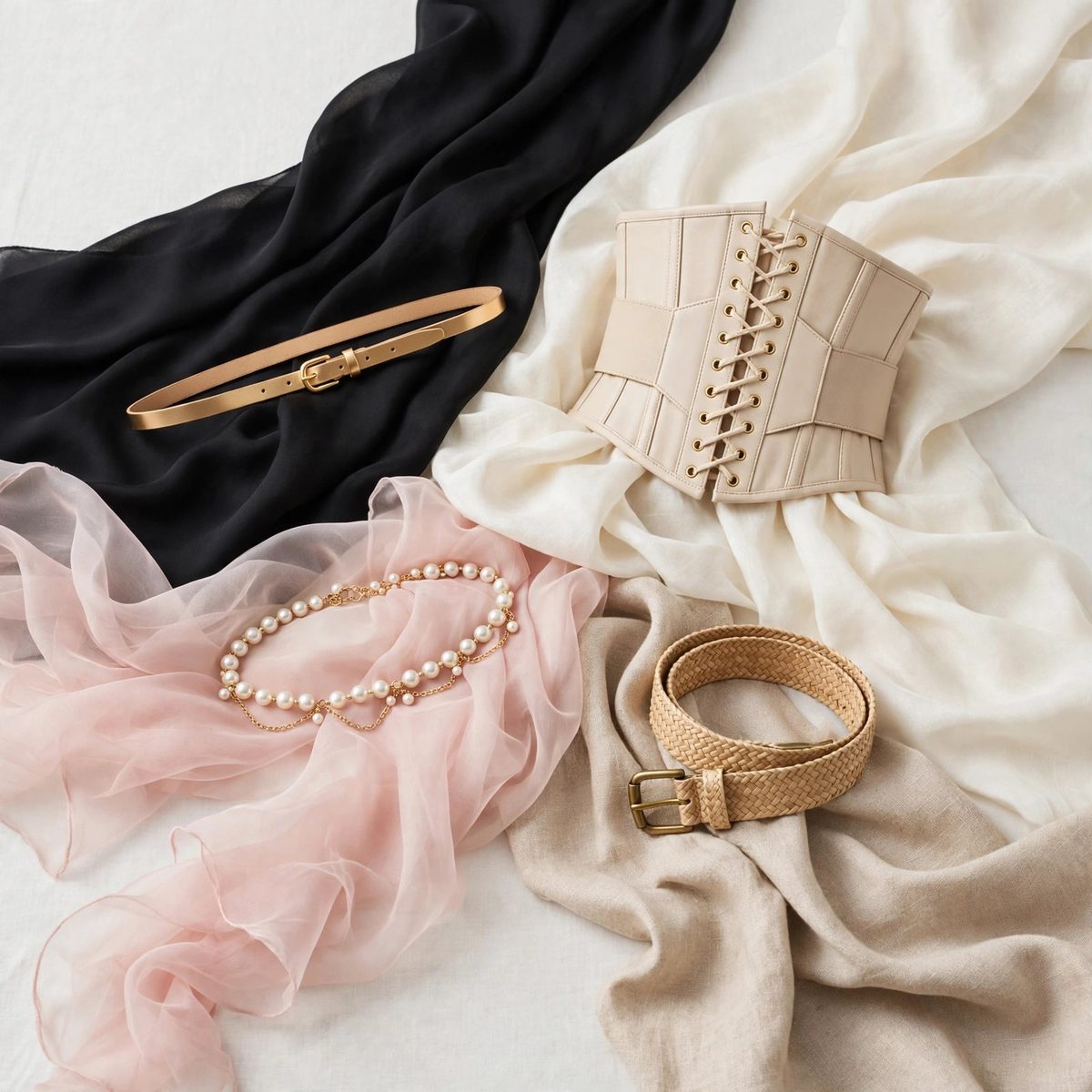
How to Style Belts with Dresses and Jumpsuits
A belt is the fastest way to change what an outfit says. The same dress reads as relaxed without one and intentional with one; a jumpsuit goes from uniform to styled the moment a waist is defined. This guide covers how to style belts with dresses and jumpsuits — where to place them, which styles suit which silhouettes, and how to avoid the common mistakes — with examples from our belts and waist accessories collection. If you are unsure of your size, our belt size guide walks through measuring first.
Why belting works
Most dresses and jumpsuits are cut with a relatively straight line from bust to hip. A belt interrupts that line at the narrowest point, creating an hourglass impression regardless of your actual proportions. It also adds a horizontal detail — color, texture, hardware — that gives the eye a focal point and makes the outfit look considered. The effect is disproportionate to the effort: thirty seconds, one accessory, a visibly more finished look.
Finding your belting point
The natural waist
For most dresses, the belt sits at the natural waist — the narrowest point of the torso, usually at or just above the navel. This is the classic placement that defines the silhouette. To find yours, bend gently to one side; the crease that forms is your natural waist.
Above the waist: empire placement
Worn just under the bust, a belt creates an empire line that lengthens the lower body visually. This suits petite frames, flowing maxi dresses, and anyone who wants leg-lengthening emphasis. Use a slim belt here — a wide belt under the bust can look restrictive rather than elegant.
On the hips
Worn low on the hips, a belt reads as relaxed and bohemian rather than defining. It suits tunic dresses, long cardigans over dresses, and low-slung styling. Hip belts need to be sized for the hips — see the measuring guide — and they work best when slightly loose rather than cinched.
Belting different dress silhouettes
Shift and straight dresses
Unstructured dresses gain the most from belting. A slim belt like the Galae Slim Leather-Look Belt at the natural waist transforms a shift dress from shapeless to tailored without overwhelming it. Keep the belt proportional: slim dresses take slim belts; a wide belt on a narrow shift can look like the belt is wearing you.
Fit-and-flare and skater dresses
These dresses already define the waist, so the belt's job is accent, not architecture. A slim belt in a contrasting texture or a delicate chain belt adds interest at the seam where the bodice meets the skirt. This is also where a pearl waist chain belt shines — it drapes over the waist seam like jewelry.
Maxi dresses
Long dresses can swallow the waist visually, especially in busy prints. A belt restores proportion — empire placement for leg length, natural waist for classic shape. Stretch and woven belts like the Miraluxe Woven Stretch Belt are comfortable choices here because they move with the fabric and do not dig in when you sit.
Shirt dresses
The shirt dress is the belt's natural partner. The included fabric tie works, but swapping it for a leather-look belt sharpens the whole look — the structure of the belt contrasts nicely with the softness of the shirting. Try the original tie at the back and the belt at the front for a styled detail.
Slip dresses
Delicate slip dresses take delicate belts: slim, chain, or a narrow sash. A heavy wide belt fights the dress's fluidity. A chain waist belt draped loosely over a slip dress is an evening-ready combination that keeps the look fluid.
Sweater and knit dresses
Chunky knits need a belt with presence — slim belts disappear into the texture. A wide belt like the Noctelle Wide Corset-Style Belt holds its own against heavy knits and defines the waist through the bulk. Expect to size up slightly to accommodate the knit thickness.
Belting jumpsuits
Jumpsuits present a specific challenge: one continuous garment from shoulder to ankle, often with no waist definition at all. A belt is the single most effective styling tool for a jumpsuit, and the placement rules differ slightly from dresses because the garment's structure is different.
Define or drape
For tailored jumpsuits, belt at the natural waist to create shape — a slim or medium belt keeps the look sharp. For relaxed, wide-leg jumpsuits, a belt worn slightly loose at the waist (or a draped chain belt) adds polish without fighting the garment's ease. Avoid belting very structured jumpsuits that already have a defined waistband; doubling the waist detail looks fussy.
Mind the proportions
Jumpsuits are long visual lines, so the belt becomes a prominent horizontal break — choose it deliberately. A contrasting belt color creates a bold color-blocked effect; a tonal belt defines quietly. Metallic and chain belts add evening polish to a black jumpsuit, which is one of the most reliable event outfits in existence.
The back view
Jumpsuit backs are often plain, which makes the belt's back detail visible — a corset-style lace-up, an interesting buckle, or a draped chain all show. When choosing, consider the 360-degree view, not just the front.
Choosing belt width
- Slim (under 1 inch): subtle definition, delicate dresses, empire placement, professional settings. The safe default.
- Medium (1–2 inches): the versatile middle — visible enough to matter, restrained enough for most dresses. Best single belt width if you buy one.
- Wide (over 2 inches): statement belting for simple dresses, knit dresses, and jumpsuits. Needs enough torso length to avoid overwhelming — petite shoppers should try before committing to very wide styles.
- Chain and draped: jewelry for the waist. Best over simple fabrics where the metalwork shows; they add no real cinching, so pair with a dress that holds its own shape.
Color and hardware coordination
The belt's color strategy depends on the effect you want. A belt that matches the dress (black on black, tan on tan) defines the waist quietly — the silhouette changes, the palette does not. A contrasting belt (tan on a black dress, metallic on navy) makes the waist a feature. As a rule, match the belt's hardware to your other metals: gold buckle with gold jewelry, silver with silver. This small consistency is what makes a belted outfit look styled rather than assembled.
Common belting mistakes
- Wrong size: a belt that fastens on the last hole with a long flapping tail, or one straining on the first hole, undermines the whole effect. Measure first.
- Belting everything: dresses with defined waistbands, peplums, or strong waist seaming usually do not need a belt — adding one creates visual clutter at the waist.
- Ignoring proportions: a wide statement belt on a petite frame with a short waist can compress rather than define. Scale the belt to your torso.
- Forgetting comfort: a rigid wide belt worn all day over a fitted dress can dig when you sit. Stretch backs, corset lacing with give, and slightly looser placement solve this.
- Clashing hardware: a gold-buckled belt with silver jewelry and a silver-clasped bag looks unintentional. Pick a metal family for the outfit.
From day to evening
One of the belt's best tricks is the day-to-evening conversion. A work dress belted with a slim leather-look belt becomes an evening look when you swap in a chain belt or a metallic finish, add statement earrings, and switch to an evening clutch. The dress has not changed; the waist detail and accessories have. Keep a dressier belt in your desk drawer or bag and the transformation takes a minute.
Belting is a small skill with an outsized payoff. Learn your waist placement, own your measurements, match the belt's weight to the garment's weight, and keep the hardware consistent — and nearly every dress and jumpsuit you own gets a second styling life. Browse belts and waist accessories to find the widths and finishes your wardrobe is missing.