Article
8 Ways to Tie a Scarf for Evening Looks
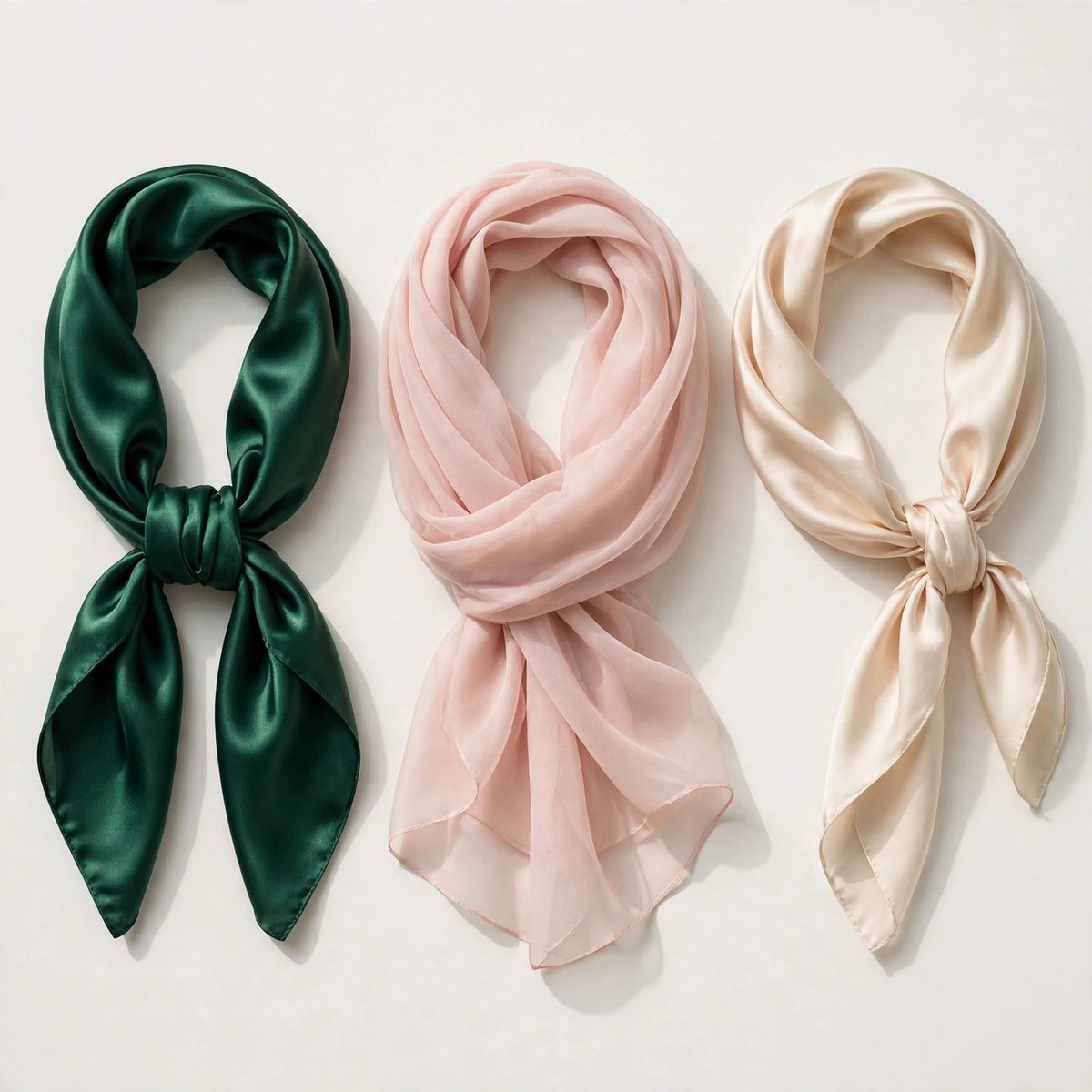
8 Ways to Tie a Scarf for Evening Looks
A scarf is one of the most versatile pieces in an evening wardrobe — a wrap against a chilly venue, a color accent for a simple dress, a textural contrast for sleek fabrics. But an untied scarf draped without intention can look like an afterthought. These eight tying methods, from the simplest drape to the most structured knot, give every scarf in our scarves and wraps collection a deliberate, polished role in your evening look. For fabric-specific advice — which methods suit chiffon versus knit — see our scarf fabric guide.
Before you tie: scarf prep
- Match the method to the fabric: slippery satins and silk-look scarves suit simple drapes and single knots; textured knits and crepes hold complex knots. Forcing an elaborate knot in chiffon usually ends in frustration.
- Consider the size: large wraps and blanket scarves like the Galae Plaid Blanket Scarf suit drapes and wraps; smaller square or rectangular scarves like the Noctelle Satin Silk-Look Scarf suit neck knots and loops.
- Steam or smooth first: a wrinkled scarf undermines even the best knot. A quick steam makes every method below look twice as good.
- Check the mirror from the side: scarf knots look different in profile than head-on. The side view is what other people see most.
1. The simple drape
Fold the scarf lengthwise if it is wide, then lay it over your shoulders with both ends hanging evenly in front. No knot at all. This is the method for sheer evening scarves — a lightweight chiffon scarf or an evening shawl wrap — where the fabric's movement is the whole point. It suits formal events because it does not disturb the dress's neckline, and it is the fastest option when you are running late. The trade-off: it slips. For security, cross the ends loosely in front or add a discreet pin at the shoulder.
2. The single loop
Fold the scarf in half lengthwise, drape it around your neck with the loop on one side and the loose ends on the other, then pull the ends through the loop and adjust. Clean, secure, and endlessly wearable — the single loop works with knits, wraps, and medium-weight scarves. For evening, keep the loop loose and low rather than cinched tight at the throat; a relaxed loop reads as elegant, a tight one as wintery. This is the best all-purpose method for an infinity knit scarf worn as a single loop, or any rectangular scarf of medium weight.
3. The Parisian knot
Fold the scarf in half, place the fold around your neck, pull the loose ends through the loop — then take it one step further: twist the loop once and pull the ends through again. The double pass creates a fuller, more structured knot that sits beautifully at the collarbone. It suits silk-look and satin scarves for evening because the knot's sheen becomes a jewelry-like focal point. Keep the rest of the neckline simple — this knot competes with statement necklaces, so choose one or the other.
4. The waterfall drape
Drape the scarf around your neck with one end significantly longer than the other. Take the long end, bring it across your body, and toss it over the opposite shoulder so it cascades down your back. The front shows a soft diagonal fold; the back shows the flowing length. This asymmetric method is particularly flattering with one-shoulder dresses and strapless necklines, where the diagonal line echoes the outfit. It works best with fluid fabrics — chiffon, satin, lightweight georgette — that fall in clean folds rather than stiff ones.
5. The shawl wrap
Open a large wrap or blanket scarf fully and drape it over your shoulders like a shawl, letting it fall evenly down your back and arms. Bring the front edges together and secure with a brooch, a decorative pin, or a simple knot at the sternum. This is the method for chilly venues, outdoor ceremonies, and winter events — it provides real warmth while looking intentional. An emerald evening shawl wrap worn this way over a dark dress is a complete evening look on its own. For extra security, the pin matters: without it, you will spend the evening shrugging the wrap back into place.
6. The side knot
Drape the scarf around your neck with both ends in front, then tie a single loose knot off to one side, just below the collarbone. The asymmetry is modern and relaxed — it suits cocktail parties and festive dinners better than black-tie formality. This method shows off patterned scarves beautifully because the knot gathers the pattern into a focal point while the ends display it. It also keeps the center of the neckline clear, which flatters pendants and V-necks.
7. The belted wrap
Drape a large scarf or wrap over your shoulders as in the shawl method, then belt it at the waist over the scarf. The belt — a slim leather-look belt or even a chain belt from our belts collection — transforms the wrap into a structured cape-like layer. This is a striking evening option for outdoor ceremonies and fashion-forward events: it stays put without pins, defines the waist, and looks deliberately styled. It needs a generously sized wrap to work — a small scarf will pull and distort.
8. The headscarf tie (evening edition)
Fold a square or rectangular scarf into a band and tie it as a headband-style wrap, knotting at the nape or to one side. In silk-look or satin fabrics, this reads as vintage glamour — think old-Hollywood evening style — and it keeps hair controlled on windy evenings or outdoor events. Pair it with simple earrings (the scarf is near the ears, so keep them understated) and a confident lip color. This method also rescues a bad hair day with more elegance than any other option on this list.
Pairing scarves with the rest of the look
With evening bags
Coordinate, don't match exactly. A champagne satin scarf with a champagne satin clutch can look like a uniform; instead, echo tones — a blush scarf with a neutral clutch, or a scarf that picks up one color from a patterned bag. Browse evening clutches with your scarf's palette in mind.
With jewelry
Scarves worn at the neck compete with necklaces — choose one focal point. A scarf plus earrings is the classic safe pairing; a scarf plus a statement necklace is usually one too many. Bracelets and rings never conflict with a scarf.
With outerwear
For events requiring a coat, tie the scarf to work with the coat's neckline, not against it. The single loop and the Parisian knot sit neatly inside most coat collars; the shawl wrap generally goes over a coat rather than under it.
Quick method picker
- Most formal: simple drape, waterfall drape.
- Most secure: Parisian knot, belted wrap, shawl wrap with a pin.
- Most warmth: shawl wrap, single loop with a knit.
- Most dramatic: belted wrap, headscarf tie.
- Fastest: simple drape, single loop.
- Best for showing pattern: side knot, waterfall drape.
Eight methods, one scarf drawer, endless evenings. Learn two or three that suit your fabrics and your venues, and the scarf stops being an accessory you own and becomes a tool you use — which is when it earns its place in the evening wardrobe.